
What a single slow drain can tell you
A kitchen sink that drains slowly while the bathroom works normally gives us a different starting point from a sink and dishwasher that both back up. Kitchen drains can accumulate grease and food residue. Bathroom sink, tub and shower lines can collect hair and soap residue.
Tell us whether the fixture drains slowly or has stopped completely, how long it has been happening, and whether water shows up anywhere else. Those details help narrow down where the blockage is and what equipment may be needed.
How a fixture blockage is cleared
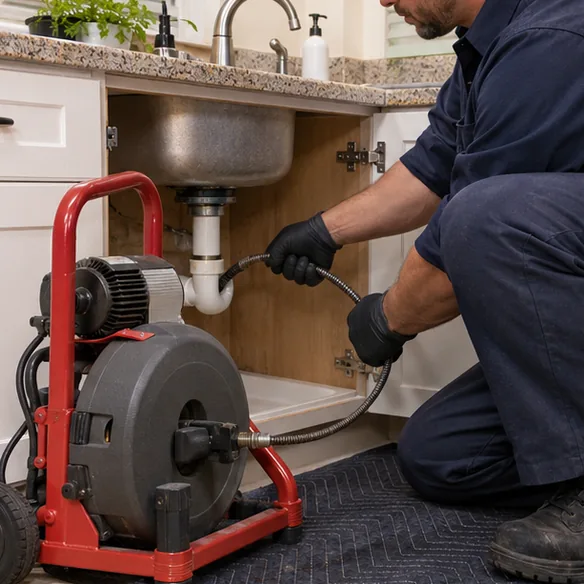
The first question is how to reach the affected line. The fixture, trap or an accessible cleanout may provide an entry point, depending on the plumbing. A cable can be appropriate when the problem is a localized obstruction.
After clearing a blockage, running water through the fixture helps check whether flow has returned. If the same fixture repeatedly backs up, tell us how long past clearings lasted. That history matters when deciding whether the branch line needs more attention.
When to ask about the main sewer line
A toilet that gurgles when you run the washer, or water coming up in a low floor drain while a different fixture is draining, is worth describing when you call. These symptoms can point to a shared line. If wastewater is backing up, avoid using affected fixtures until you can get guidance.
What affects the quote
Accessibility, the location of the clog, how many fixtures are involved, and the clearing method can affect the cost. Tell us if the fixture has been worked on recently or if a chemical drain cleaner has already been used.
Common questions
Can I book help for a single slow sink?
Yes. Call with the fixture type and tell us whether nearby drains are also slow. That helps us narrow down the problem.
What if the drain was just cleared and clogged again?
Tell us what work was done and how soon it backed up. A recurring blockage may need a closer look at the branch line or the downstream connection.
What if I already used a drain chemical?
Tell us what was used and when. That information helps the person handling the drain choose the right precautions.